
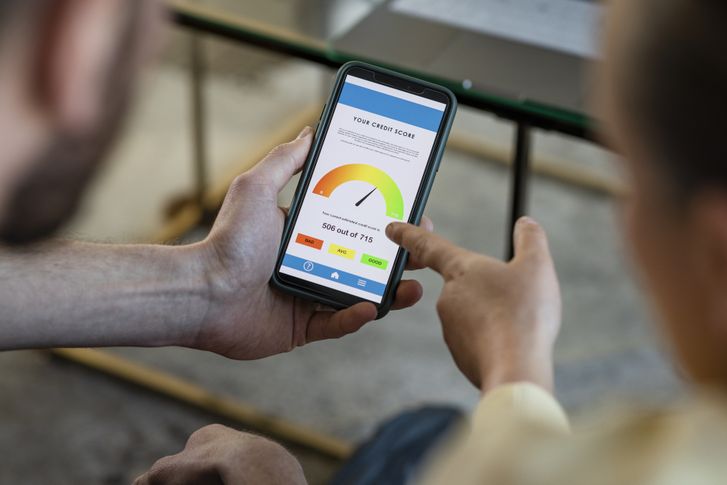
How to Check Your Credit Score for Free
You can check your credit score for free in Australia, and it only takes a few minutes. You're entitled to a free copy of your credit report from each credit reporting body every three months, and several free services show your score online. Checking your own score never lowers it.
Here's where to check, what the numbers mean, and what to do if your score is lower than you'd like.
What is a credit score?
Your credit score is a number that sums up your credit report. Lenders use it as one guide to how reliably you've handled credit in the past.
Your credit report is the detail behind the number. It lists your credit accounts, applications you've made, repayment history over the last two years, and any defaults or court judgments.
How to check your credit score for free
- Pick a credit reporting body. Australia has three: Equifax, Experian and illion. Experian completed its purchase of illion in October 2024, but both still hold credit files.
- Request your free report or score online. Have your driver's licence or Medicare card ready to confirm your identity.
- Check all three if you can. Each bureau holds slightly different information, so your score can differ between them.
- Read the report, not just the number. Look for accounts you don't recognise, wrong addresses or defaults you've already paid.
You can get a free report from each bureau every three months. Many free apps and websites also show a score, usually from one bureau, in exchange for signing up.
What is a good credit score in Australia?
Each bureau uses its own scale, so a "good" score is a different number at each one.
- Excellent: Equifax (0 to 1,200): 833 to 1,200. Experian (0 to 1,000): 800 to 1,000. illion (0 to 1,000): 800 to 1,000.
- Very good: Equifax (0 to 1,200): 726 to 832. Experian (0 to 1,000): 700 to 799. illion (0 to 1,000): 700 to 799.
- Good: Equifax (0 to 1,200): 622 to 725. Experian (0 to 1,000): 625 to 699. illion (0 to 1,000): 500 to 699.
- Fair or average: Equifax (0 to 1,200): 510 to 621. Experian (0 to 1,000): 550 to 624. illion (0 to 1,000): 300 to 499.
- Below average: Equifax (0 to 1,200): 0 to 509. Experian (0 to 1,000): 0 to 549. illion (0 to 1,000): 0 to 299.
Bands as published by RateCity. Bureaus can update their bands.
A score in the "good" band or higher generally gives you the most borrowing options. A lower score doesn't automatically rule you out. Many lenders, including Jingle, look at your current income, expenses and repayment history as well as your score.
What affects your credit score?
- Repayment history: paying on time helps, and late payments over 14 days can show on your report.
- Defaults: an unpaid debt of $150 or more that's at least 60 days overdue can be listed as a default. It stays on your report for five years, even after you pay it.
- Credit applications: each application is recorded as an enquiry, and many in a short time can lower your score.
- Your credit limits: high limits you don't use can still count against you, because lenders see what you could owe.
- Hardship arrangements: these are recorded for 12 months but don't affect your score.
Does checking your credit score lower it?
No. Checking your own score or report is not a credit application, so it doesn't appear to lenders and doesn't affect your score. Only applications for credit are recorded as enquiries.
How to improve your credit score
- Pay every bill on time, including phone and utility bills. Set up direct debits on payday.
- Fix mistakes. Contact the bureau or the credit provider to correct errors. It's free.
- Space out applications. Compare first, then apply for the one that fits.
- Lower unused limits or close cards you don't need.
- Pay down what you owe, starting with the highest-cost debts.
Most people see their score improve within a few months of on-time payments. Defaults take longer, because they stay listed for five years. Our guide to credit scores goes into more detail.
What if your credit score is low?
A low score doesn't have to stop you, but it pays to fix what you can first. If you need to borrow, look for a licensed lender that assesses your whole situation, not just the number.
Jingle looks at your current income, expenses and ability to repay as well as your credit history. Learn more about bad credit loans. Approval is not guaranteed.
Frequently asked questions
How can I check my credit score for free?
Request a free report from Equifax, Experian or illion, which you can do every three months each. Several free online services also show your score after you sign up.
What is a good credit score in Australia?
It depends on the bureau. A "good" Equifax score starts at 622 out of 1,200, while a "good" Experian score starts at 625 out of 1,000.
Why are my credit scores different?
Each bureau holds slightly different information and uses its own scoring model and scale.
How long do defaults stay on your credit report?
Five years from the date they're listed, even if you pay the debt. Paying it still helps, because the listing is updated to show it's been paid.
Does checking my credit score lower it?
No. Only applications for credit are recorded as enquiries.
How long does it take to improve a credit score?
Often a few months of on-time payments for small gains. Bigger issues like defaults take longer to fade.
Sources
Disclaimer: This information is general in nature and doesn't take your objectives, financial situation or needs into account. Credit provided by Jingle Finance Pty Ltd ACN 132 485 066 trading as Jingle Loans, Australian Credit Licence 388143, to approved applicants only. Terms, conditions, fees, charges and eligibility criteria apply.